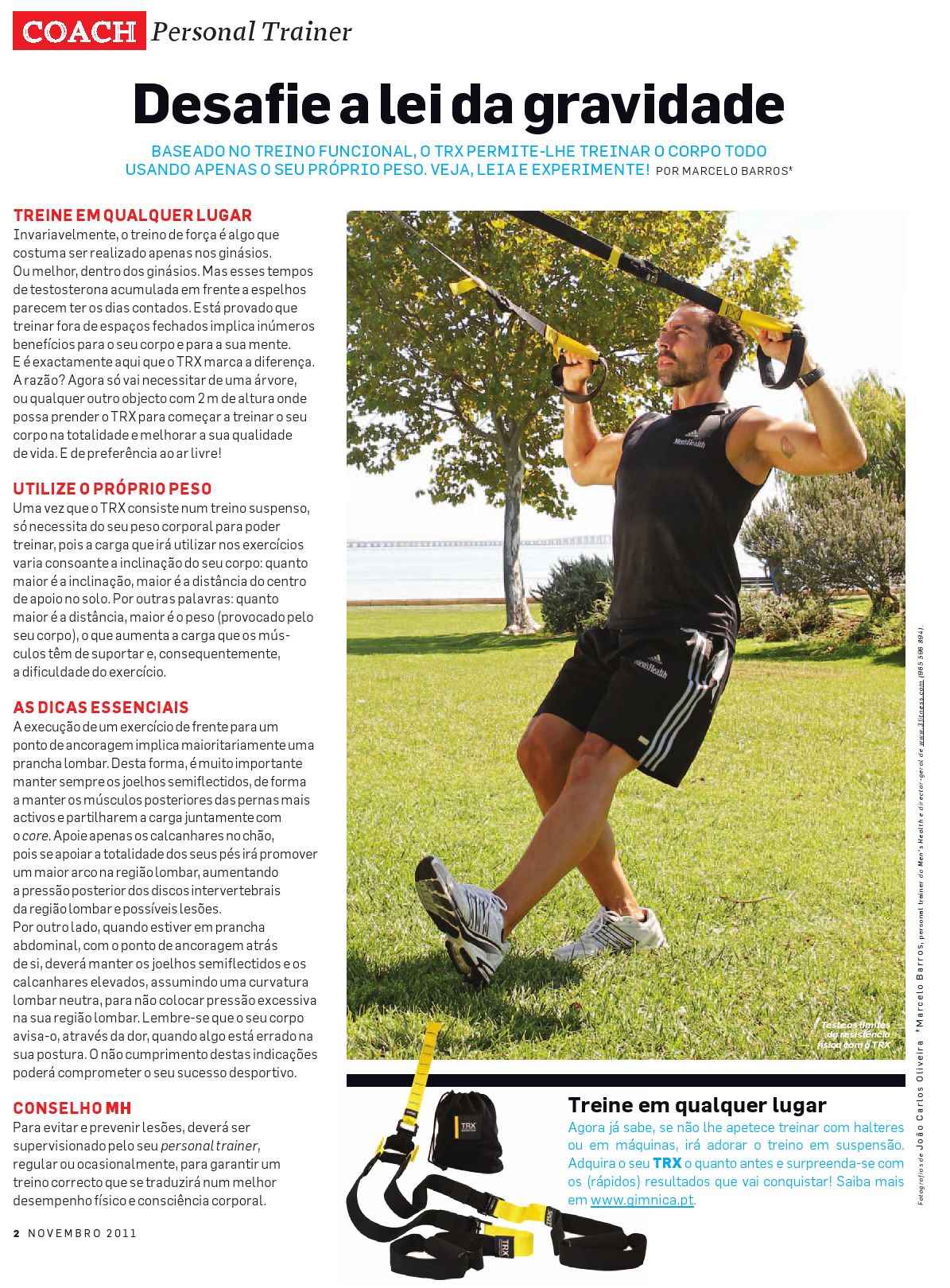
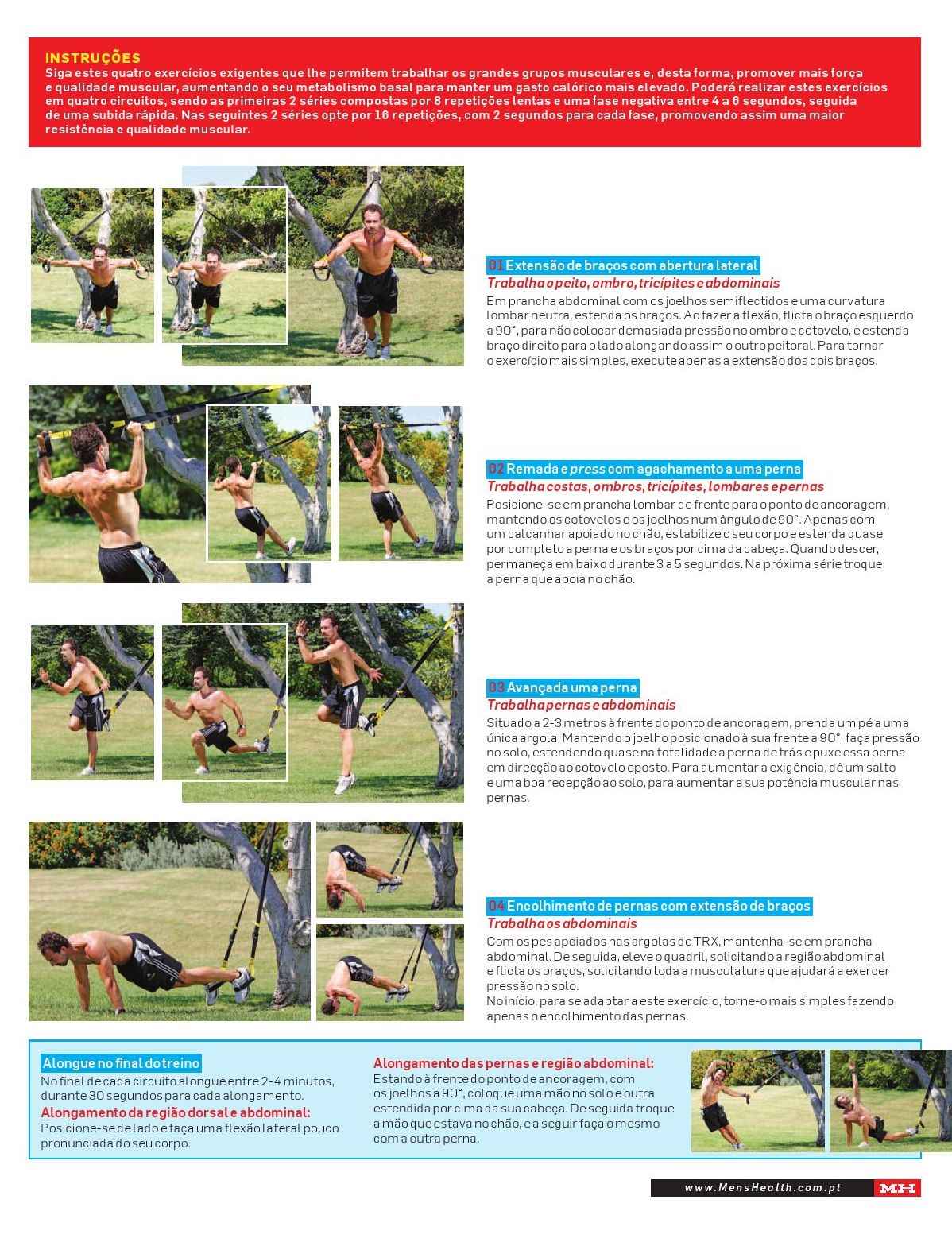
———————————————-
Durante as ultimas décadas, o treino de força na maioria das vezes, realizou-se sempre dentro de ginásios. Exceptuando em Venice Beach, Califórnia, um dos poucos espaços onde é possivel, sentir o congestionamento muscular e o nivel de testosterona a subir, fora de portas.
Tornando assim qualquer actividade fisica muito mais agradável, e agora isto é possivel, em qualquer lugar ao ar livre com o TRX.
Basta encontrar um local onde possa ancorar o seu TRX, seja numa árvore, num poste, ou qualquer outro sitio com 2m de altura, ao ar livre onde prefira treinar, enquanto escuta a sua musica ou prefere a musica da natureza involvente.
Quando praticamos qualquer actividade fisica ao ar livre, promovemos um maior estimulo de uma zona no nosso cérebro, chamada hipotálamo, que é uma estrutura do sistema nervoso central, que regula as funcões vitais do nosso corpo, como o ritmo circadiano, a fome ou a sede, a taxa metabólica, a pressão sanguinea, ou as expressões emocionais como o medo ou o prazer, e um bom estimulo desta zona do tamanho de uma amêndoa situada no diencéfalo, poderá contribuir para uma melhor saude e qualidade de vida, daí ser tão importante realizar treinos ao ar livre, e variar o local desses treinos para além do ginásio.
Trabalho Muscular ao ar livre
Será aqui que o TRX tem o seu factor mais interessante, porque para além de correr, caminhar ou pedalar, etc, ao ar livre realizando um trabalho aeróbio, com o TRX é possivel realizar um treino anaeróbio ao ar livre, juntando os vários factores associados, como substituir ou complementar treino de força no ginásio, e ao mesmo tempo, ser mais saudável, fazendo uma maior estimulação do hipotálamo e promovendo assim a nossa qualidade de vida.
Uma vez que o TRX consiste num treino suspenso, só necessita do seu peso corporal para poder treinar, pois a carga que irá utilizar nos exercicios varia consoante a inclinação do seu corpo: Quanto maior é a inclinação, maior é a distância do centro de apoio no solo. Por outras palavras: Quanto maior é o peso (provocado pelo seu corpo), o que aumenta a carga que os musculos têm de suportar e, consequentemente, a dificuldade do exercicio.
Sendo esta resistência variável, consoante a que distância estamos do ponto de ancoragem do TRX, ou seja, quanto mais perto estamos do ponto, mais peso vamos colocar no exercicio.
Assim usando o magnetismo do nosso planeta em sintonia com uma paisagem perfeita, é possivel gerar maiores estimulos nueromusculares e multi-sensoriais de forma dinâmica, com exercicios mono, ou poli-articulares, para trabalhar qualquer objectivo, como a força, estabilidade, resistência, ou a flexibilidade.
Um Core mais forte
O core será a região que mais irá trabalhar com este acessório, sendo essencial a sua função na força e na estabilidade da coluna vertebral, originando uma musculatura abdominal e lombar mais forte para obter uma melhor correcção postural. Mas, é neste ponto muito importante, que você precisa de estar muito consciente dos movimentos que irá realizar, porque uma má postura num exercicio, poderá compromenter a saude das suas costas, originado por vezes na má execução dos exercicios, e consequentes lesões na coluna vertebral, como uma hérnia discal, já reportada em alguns utilizadores do TRX.
A causa destas lesões, pode ocorrer devido a estas más posturas, devido ao não conhecimento, aliado à falta de consciência corporal, durante a actividade com este acessório.
Assim, para evitar, prevenir e optimizar o seu tempo, aconselho que deverá ser supervisionado pelo seu treinador, regularmente ou ocasionalmente, uma vez por semana, ou por mês, para que possa ter a certeza de um bom treino, resultando em melhor desempenho fisico, e consciência corporal, poupando problemas ou gastos maiores, na rehabilitação de lesões originadas pela pouca substanciosa execução dos exercicios no TRX.
A importância da boa técnica de execução
Convém lembrar que quando executamos um exercicio de frente para o ponto de ancoragem, estaremos na maioria das vezes em prancha lombar, sendo muito importante manter sempre os joelhos semi flectidos, para manter os musculos posteriores das pernas mais activos e partilharem a carga juntamente com o core, e apoiar apenas os calcanhares no chão, visto que, quando irá apoiar a totalidade dos seus pés no chão, irá promover um maior arco na região lombar, aumentando a pressão posterior dos discos intervertebrais da região lombar.
Quando estiver em prancha abdominal, com o ponto de ancoragem atrás de si, deverá seguir os procedimentos iguais quando faz uma prancha abdominal no solo, ou seja, mantendo os joelhos semi-flectidos, assumindo uma curvatura lombar neutra ou mesmo nula, para não colocar pressão excessiva na região lombar. Lembre-se que o seu corpo avisa-o, com a sensação de dor, quando algo está errado na sua postura, quando você está consciente e concentrado nos exercicios que está a realizar. O não cumprimento destas indicações poderá comprometer o seu sucesso desportivo.
Visto que os nossos leitores, são dedicados ao seu corpo e na grande maioria são atletas regulares cada um no seu desporto, escolhi 4 exercicios exigentes, para trabalhar os grandes grupos musculares, e assim melhorar o seu aspecto fisico e promover mais força e qualidade muscular, aumentando o seu metabolismo basal para manter um gasto calórico mais elevado, pois só um corpo com mais potência muscular, poderá gastar mais energia.
Alguns Exercicios:
– Remada e press com agachamento a uma perna
Posicione-se em prancha lombar de frente para o ponto de ancoragem, mantenha os cotovelos e os joelhos a 90º, e com um calcanhar apenas apoiado no chao, estabilize o seu corpo e estenda quase por completo a perna e o braços por cima da cabeça, ao descer novamente permaneça em baixo durante 3 a 5 segundos. Na próxima série troque de perna apoiada no chão.
– Extensao de braços com abertura lateral
Em prancha abdominal com os joelhos semi-flectidos e uma curvatura lombar neutra, estique quase os braços, e ao fazer a flexão, dobre um braço só até 90º para não colocar mais pressão no ombro e cotovelo, e estenda quase, o outro braço ao lado alongando assim o outro peitoral. Para torna o exercicio mais simples, execute apenas a extensão dos dois braços.
– Encolhimento de pernas com extensão de braços
Com os pés apoiados, nas argolas do TRX, mantenha-se em prancha abdominal, e de seguida eleve o quadril quase a uma linha vertical, solicitando a região abdominal e a seguir dobre os braços, solicitando toda a musculatura que ajudará a exercer pressão no solo, região peitoral, ombros e triceps. Para se adaptar a este exercicio, torne-o mais simples fazendo apenas o encolhimento das pernas.
– Avançada uma perna
Coloque-se 2 a 3 metros à frente do ponto de ancoragem, prenda um pé a uma unica argola, mantenha a 90º o joelho posicionado à sua frente, e faça pressão no solo, estendendo por quase a sua perna e puxando o joelho de trás em direcção ao cotovelo oposto. Para aumentar a exigencia, neste exercicio, execute um salto e uma boa recepção ao solo, para aumentar a sua potencia muscular nas pernas.
Poderá realizar este exercicios em 4 circuitos, sendo as primeiras 2 séries de 8 repetições lentas com a fase negativa de duração de 4 a 6 segundos, e a subida rápida. Nas seguintes 2 séries opte por 16 repetições, de 2 segundos em cada fase promovendo assim a resistencia e a qualidade muscular.
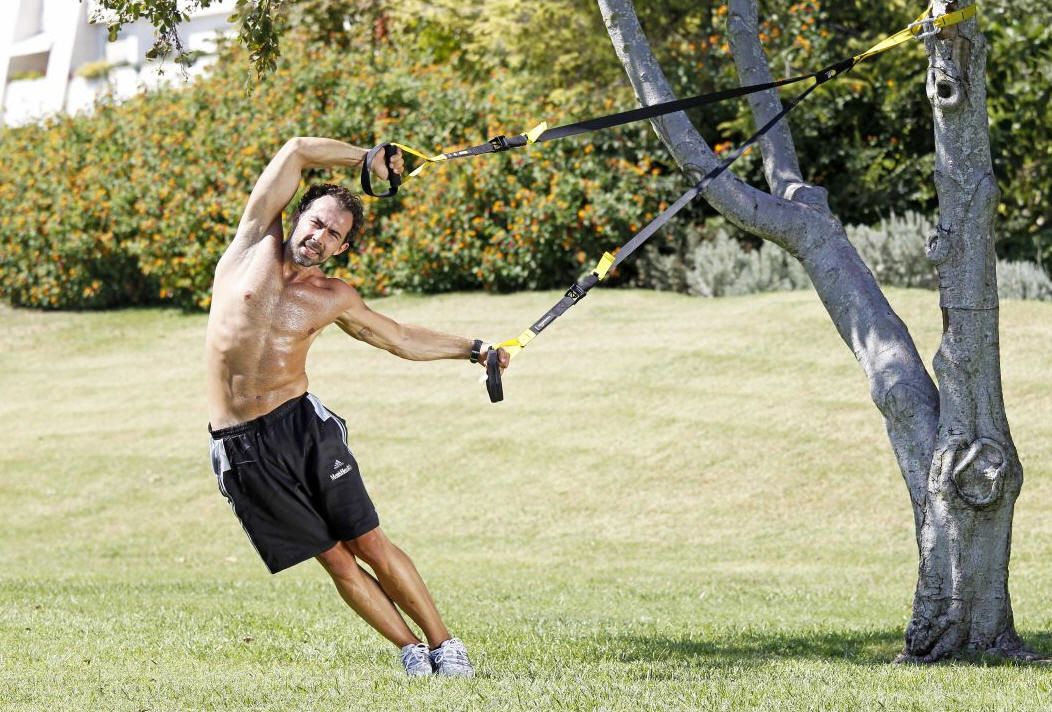
No final de cada circuito alongue 2 a 4 minutos executando estes ou outros alongamentos, durante 30 segundos cada.
Alongamento da região dorsal e abdominal
Posicione-se de lado a 2 a 3 metros do ponto de ancoragem, e faça uma flexão lateral pouco pronunciada do seu corpo.
Alongamento das pernas e região abdominal
Estando à frente do ponto de ancoragem, com os joelhos a 90º, coloque uma mão no solo e outra estendida por cima da sua cabeça. De seguida troque a mão que estava no chão, e a seguir faça o mesmo com a outa perna.
Alongamento da região peitoral
Coloque os pés à frente do ponto de ancoragem 3 a 4 metros, com os calcanhares suspensos, e deixe os braços atrás do seu corpo alongando a região peitoral, e poderá rodar lentamente os seus braços, aliviando a pressão na zona anterior dos seus ombros.
Alongamento dos posteriores da coxa e região lombar
De frente para o ponto de ancoragem, estique os braços e as pernas alongando todos os musculos posteriores do seu corpo, e de seguida semi flicta ligeiramente um dos joelhos por por 10 segundos, mantendo a outra perna esticada e alongando os lombares, gluteos e musculos posteriores da coxa.
Vamos começar a treinar ?
Marcelo Barros
NASM CPT
Personal Trainer Oficial Men´s Health Portugal
Artigo publicado na Revista Mens Health em Novembro de 2011: